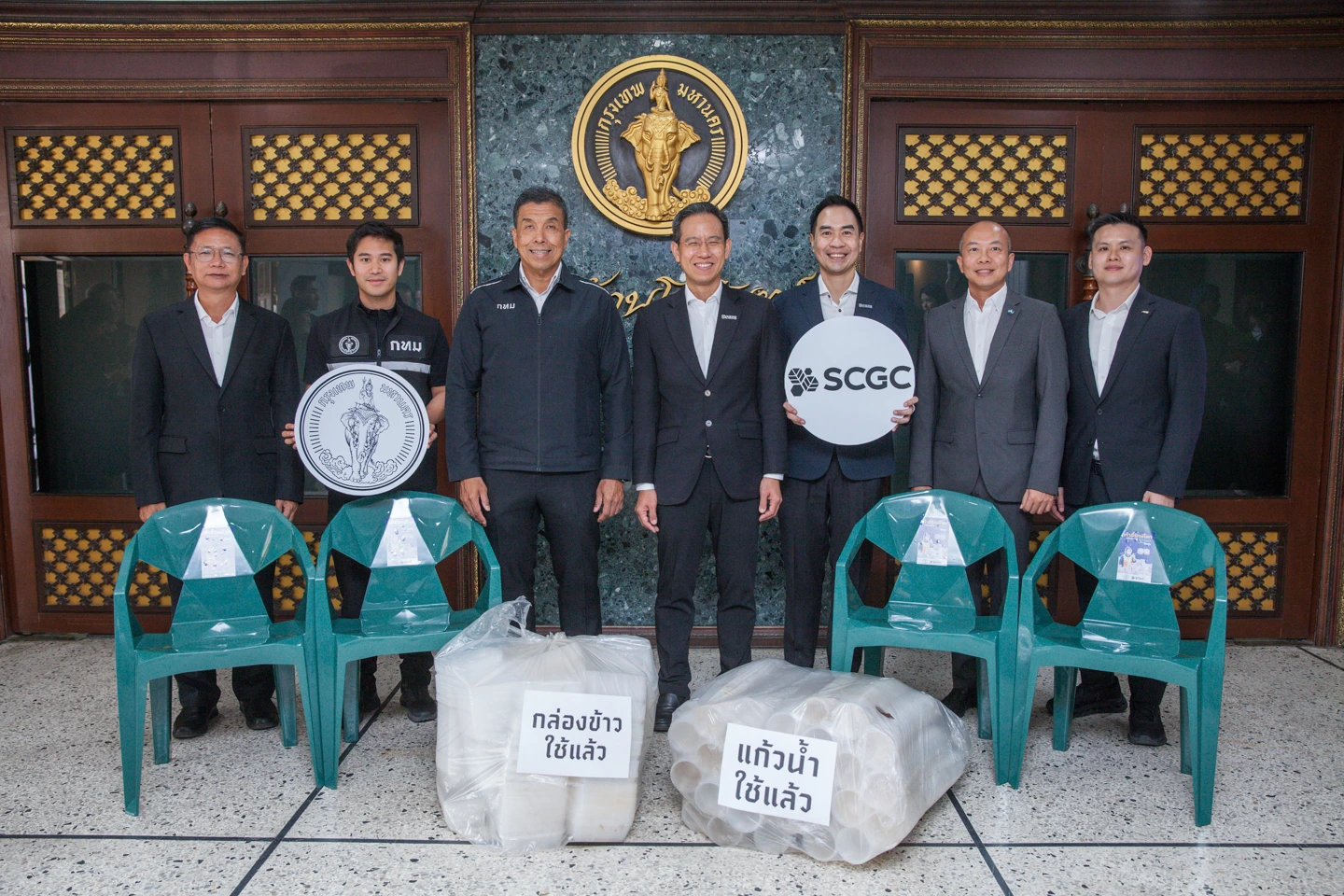
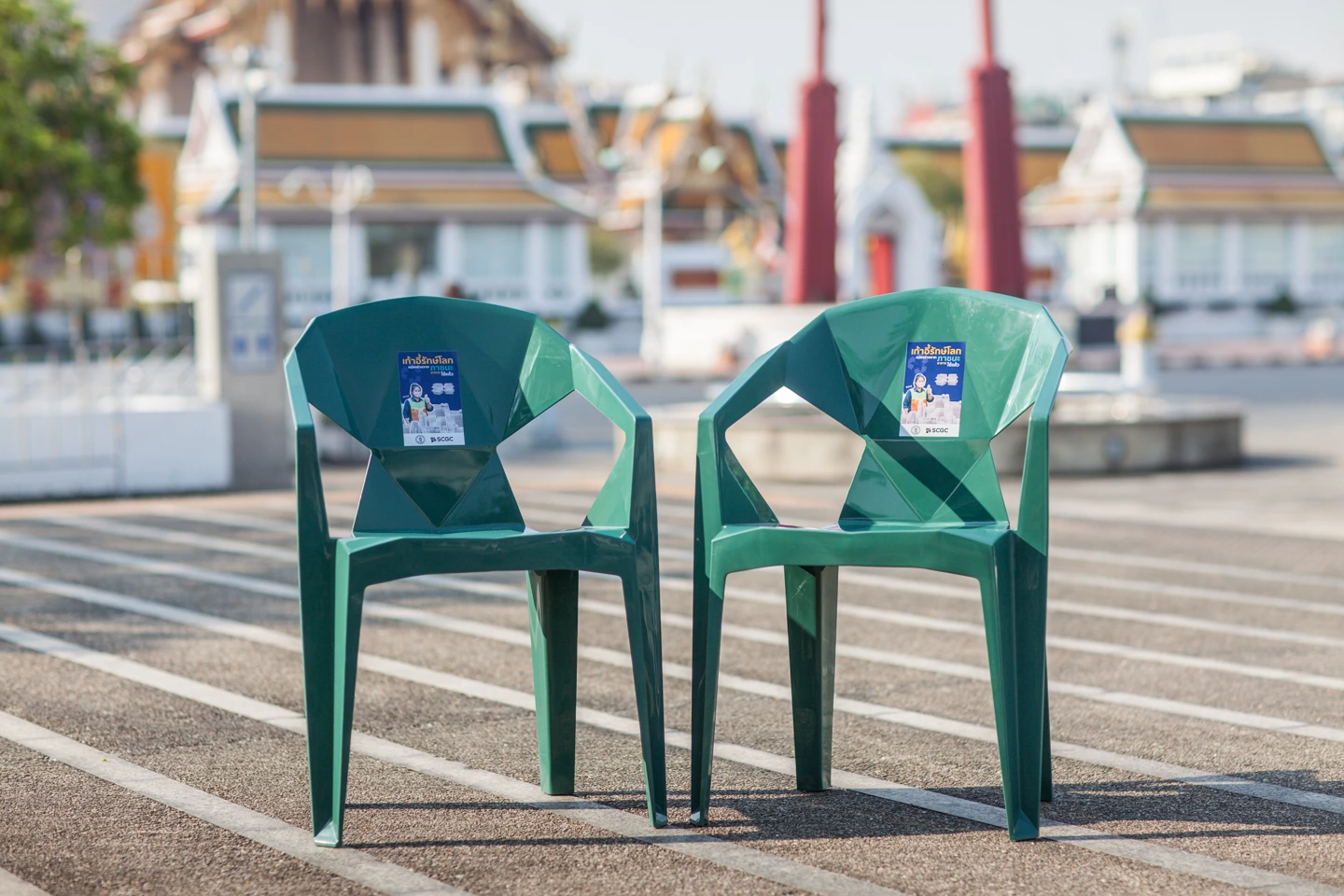
Bangkok - 13 January 2026: Bangkok Governor Chadchart Sittipunt received environmentally friendly chairs under the “Mai Te Ruam” (No Mixed Waste) model city collaboration project between the Bangkok Metropolitan Administration (BMA) and SCG Chemicals, or SCGC, a leader in integrated polymer and solutions provider for sustainability. The chairs were presented by Mr. Chatri Eamsobhana, Chief Commercial Officer of SCGC, at the Rattanakosin Room, Bangkok City Hall (Sao Chingcha). The initial delivery consists of 150 environmentally friendly chairs, manufactured using post-consumer plastic collected through waste separation efforts by the public as part of various BMA activities. This reflects the core principle of the “Mai Te Ruam” project: waste separation at source, enabling proper utilization and effective waste management. This collaboration has helped reduce post-consumer plastic waste by 9,000 kilograms and cut greenhouse gas emissions by more than 17,000 kilograms of carbon dioxide equivalent, which is comparable to planting approximately 770 trees. The initiative reinforces the tangible and efficient use of resources in line circular economy principles. Each chair incorporates 200 used food packaging as part of its components.
Mr. Chadchart Sittipunt, Governor of Bangkok, said, “Bangkok generates nearly 10,000 tons of waste per day, with disposal costs of approximately 7 billion baht per year. The city employs around 6,000 waste collection workers and about 10,000 street sweepers, while annual revenue from waste-related fees amounts to only about 1.6 billion baht, which is insufficient to cover disposal costs. Separating used packaging at the source is the core of sustainable waste management. However, it must be acknowledged that this is a major and challenging task for a large metropolis such as Bangkok. The ‘Mai Te Ruam’ project was initiated to create a model city that does sort waste, demonstrating that when we truly work together, used packaging can be effectively transformed back into valuable resources. This collaboration with SCGC is a clear example of that approach and also helps encourage the public to adopt better waste separation behaviors. These environmentally friendly chairs made from used packaging will be further utilized in royal ceremonies and public activities organized by the BMA.”
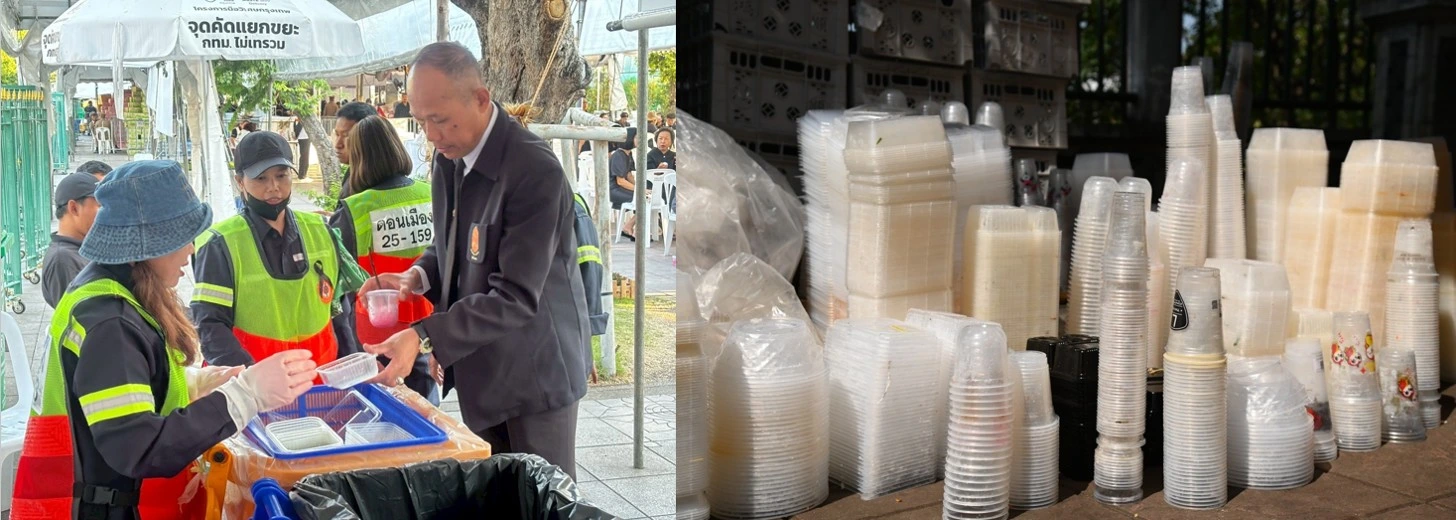
Mr. Chatri Iamsophana, Chief Commercial Officer of SCGC, added, “SCGC places a strong emphasis on leveraging innovation and recycling technologies to deliver sustainable benefits to society and the environment. Post-consumer plastics collected from areas such as Sanam Luang, including food packaging and drinking cups, have been returned to the recycling process and developed into high-quality recycled plastic pellets, or High Quality PCR PP Resin, under the SCG GREEN POLYMER™ brand. This process draws on SCGC’s expertise in material formulation to ensure strength and durability, making the material suitable for the production of environmentally friendly chairs that can be used in real-world applications. In addition, to support systematic waste separation at the source in line with the BMA’s approach, SCGC has provided 17,500 environmentally friendly garbage bags made from recycled plastic to the BMA. These will be distributed as special privileges to members of the ‘Baan Nee Mai Te Ruam’ (This House Doesn't Mix): Separate Waste, Reduce Fees’ program. This joint effort aims to foster a culture of waste reduction and separation, enhance effective waste management, and support Bangkok’s transition toward a more livable and sustainable city.”
These environmentally friendly chairs are produced from post-consumer plastic that was separated by the public through various activities organized the BMA in collaboration with its partner networks. Examples include major public events such as the Royal Funeral Ceremony of Her Majesty Queen Sirikit the Queen Mother and the Annual Red Cross Fair 2025. In this initiative, the BMA, through its Environment Department and district offices, jointly conducted public awareness campaigns, provided facilitation, and offered guidance to event participants on waste separation at source in accordance with the “Mai Te Ruam” approach. Waste was separated into three categories to ensure proper utilization and management: organic waste, which district offices processed into compost and distributed to farmers for use as animal feed; general waste, which was collected and disposed of in a hygienic manner; and recyclable waste, which was separated and returned to the recycling process. This systematic approach to waste reduction and separation at source enables used materials to be reintroduced into the recycling value chain. Through SCGC’s advanced recycling technology, the recycled plastic was further processed into environmentally friendly chairs, which will continue to be used in various activities organized by the BMA.