Transforming Carbon: New Business Opportunities with CCU Technology
In an era where the world is driving towards Carbon Neutrality and Net Zero Emissions, carbon dioxide (CO₂)—once viewed merely as "waste" from industrial processes—is being redefined as a raw material for the future. At the heart of this major paradigm shift is a technology called
CCU (Carbon Capture and Utilization).
For Thailand's industrial sector, this is no longer a distant concept. It is an opportunity to build a competitive advantage, create new business models, and drive the Circular Carbon Economy. This article will delve into the core of CCU technology, from its operating principles to tangible case studies from leading global companies (including SCGC) and the future direction Thai entrepreneurs must prepare for.
Why CCU is a Critical Piece of the Global Puzzle
The primary force making CCU a globally watched technology stems from the urgent need to reduce greenhouse gas emissions in line with international agreements. This is especially true for heavy industries like petrochemicals, cement, and steel, which have unavoidable process-related emissions. CCU addresses this by providing a key strategy to transform CO₂ from a pollutant that must be disposed of into a valuable feedstock.
How Does CCU Differ from CCS and CCUS?
To understand clearly, let's differentiate these related technologies to grasp their distinct approaches, impacts, and applications.
- CCS (Carbon Capture and Storage): This involves capturing and "storing" carbon permanently in underground geological formations. It is like a waste management process to remove carbon from the atmosphere.
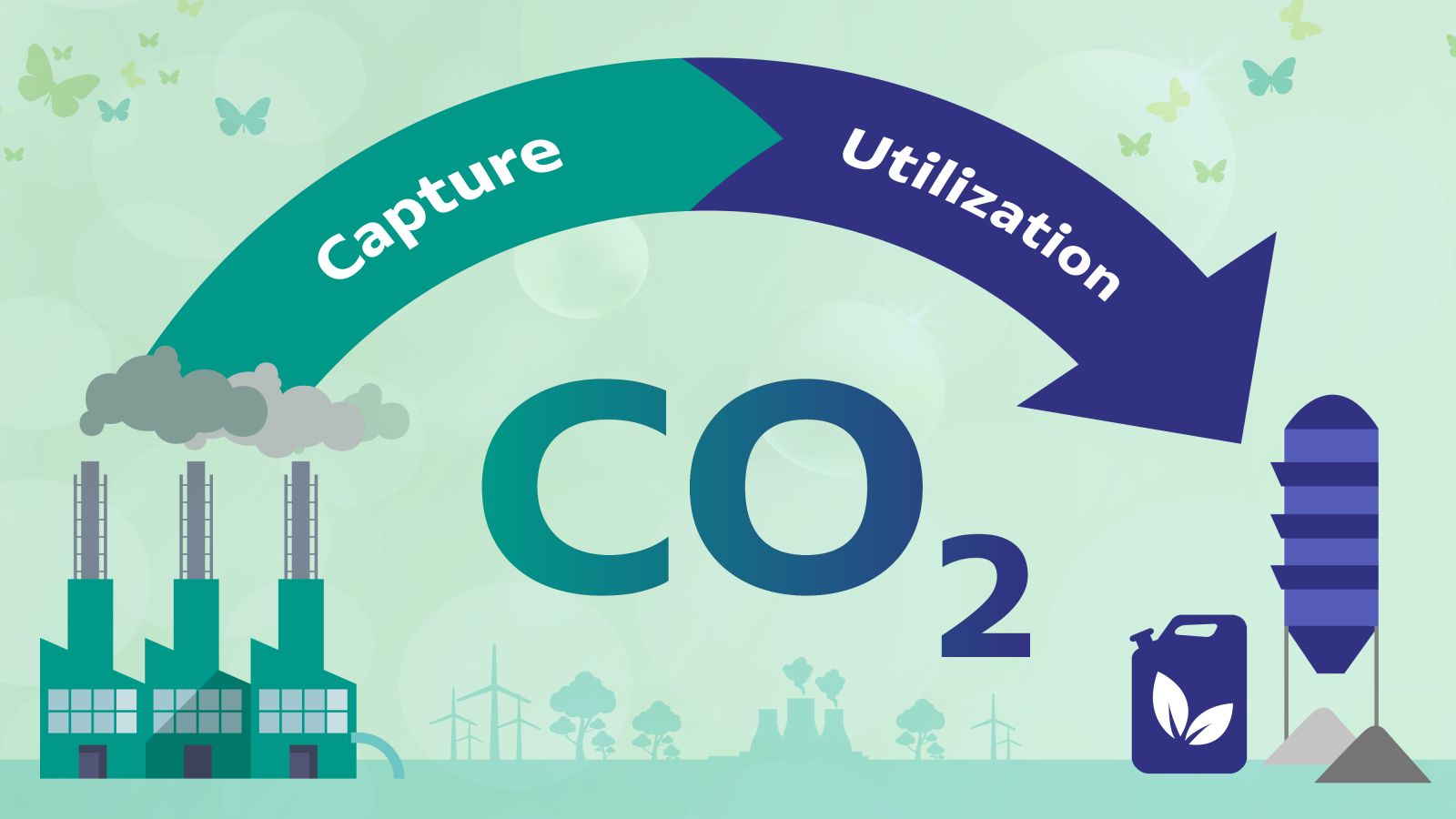
- CCU (Carbon Capture and Utilization): This involves capturing and "using" carbon, transforming it into new, valuable products. This is a circular economy approach that turns waste into a resource.
- CCUS (Carbon Capture, Utilization, and Storage): This is the most comprehensive and flexible strategic framework, combining both CCS and CCU. After capturing CO₂, an organization can choose the most suitable path—either utilization for value creation or permanent storage if commercial use is not yet viable. This allows the industrial sector to plan for comprehensive emissions reduction.
While their goals differ, CCU and CCS are complementary technologies. CCS serves to reduce carbon from fossil sources, while CCU helps reduce reliance on fossils by creating new, alternative products.
A Deeper Look at CCU: 3 Carbon Capture Methods
The heart of CCU begins with "capture," which involves three primary technologies, each with different principles, costs, and readiness.
- Pre-Combustion Capture: This method involves separating CO₂ from the fuel before it is burned. This results in a highly concentrated CO₂ stream that is easier to capture. While highly efficient, it is difficult to retrofit onto existing plants and has a higher initial investment cost.
- Post-Combustion Capture: This is the most mature technology available today. It acts like a "filter," capturing CO₂ from the flue gas after the fuel has been burned. Its greatest advantage is that it can be retrofitted to existing factories. However, it faces challenges with high energy consumption due to the low concentration of CO₂ in the exhaust.
- Direct Air Capture (DAC): This is the most advanced technology, acting like a giant air purifier that captures CO₂ directly from the atmosphere, regardless of location. It can genuinely create "negative emissions." However, it is also the most energy-intensive and expensive method due to the very low concentration of CO₂ in the air.
Case Studies: CCU in Commercial Applications
CCU technology is no longer confined to the lab; leading global companies have begun turning it into tangible businesses and products.
- Chemicals and Polymers: Germany's Covestro uses CO₂ as a feedstock to produce polyols, a key component in mattresses, furniture, and insulation. This can reduce the use of petroleum-based raw materials by up to 20%.
- Construction Materials:CarbonCure injects CO₂ into fresh concrete during mixing. The CO₂ reacts and becomes a mineral, permanently embedding it within the concrete. This not only stores the carbon but also increases the concrete's strength, allowing for a reduction in the amount of cement used.
- Sustainable Aviation Fuel (SAF):LanzaJet, a US biotech firm, has developed a process to convert ethanol—produced from captured carbon gases from industrial plants—into Sustainable Aviation Fuel (SAF). This significantly reduces greenhouse gas emissions in the aviation sector.
- Alternative Protein:Solar Foods, a Finnish food-tech startup, has created a protein called Solein. It is produced using CO₂ captured from the air, which reacts with water and renewable electricity in a gas fermentation process, directly creating food from air and electricity. * Food and Beverage:Coca-Cola bottlers are installing systems to capture CO₂ from their own on-site power generation processes. This captured CO₂ is then purified and reused to carbonate their beverages, reducing costs and securing their supply chain.
The Future of CCU in Thai Industry
Despite its high potential, CCU still faces challenges, including the need for CO₂ transport infrastructure and costs that are higher than traditional products—a difference known as the "Green Premium."
However, the current situation for CCU is similar to the solar industry 20 years ago, which also had high costs and relied on government support. Through innovation and large-scale production, solar costs dropped dramatically. CCU is on the same path, driven by key factors:
- Government Policy: Policy incentives, such as tax credits for carbon capture (like the 45Q policy in the U.S.) and carbon pricing, will be critical accelerators to make CCU projects economically viable.
- Market Demand: Consumers and multinational corporations are increasingly prioritizing low-carbon products, pressuring supply chains to adapt.
- Transparent Assessment:Life Cycle Assessment (LCA) will be crucial to prove the true environmental value of CCU-derived products and build market confidence.
Conclusion: From a Business Burden to a Future Opportunity
CCU is changing the industrial equation. Carbon dioxide is shifting from being seen as a cost liability and an environmental problem to an opportunity for environmental innovation.
For Thai entrepreneurs, this is the time to start studying and seeking pathways to apply CCU technology—whether to reduce emissions in their own processes or to find opportunities in creating new products from CO₂. This is not just a sustainability trend; it is the future of competition in the next global economy.
Sources:
- CO2 Capture and Utilisation - Energy System https://www.iea.org/energy-system/carbon-capture-utilisation-and-storage/co2-capture-and-utilisation
- รู้จัก CCUS เทคโนโลยีดักจับคาร์บอนของวันนี้ ที่จะมาช่วยเปลี่ยนโลกในอนาคต https://enhrd.dede.go.th/%E0%B8%A3%E0%B8%B9%E0%B9%89%E0%B8%88%E0%B8%B1%E0%B8%81-ccus-%E0%B9%80%E0%B8%97%E0%B8%84%E0%B9%82%E0%B8%99%E0%B9%82%E0%B8%A5%E0%B8%A2%E0%B8%B5%E0%B8%94%E0%B8%B1%E0%B8%81%E0%B8%88%E0%B8%B1%E0%B8%9A/
- Carbon Capture Utilization (CCU) เทคโนโลยีที่เปลี่ยนคาร์บอน ให้กลายเป็นวัสดุแห่งอนาคตของวงการก่อสร้างและออกแบบอาคาร | Wazzadu https://www.wazzadu.com/article/7295
- Carbon Capture Utilisation and Storage - Energy System -IEA https://www.iea.org/energy-system/carbon-capture-utilisation-and-storage
- Post combustion capture of carbon dioxide | NSW Resources https://www.resources.nsw.gov.au/invest-nsw/coal-innovation-nsw/post-combustion-capture-of-carbon-dioxide
- How is carbon captured? https://www.enbridge.com/~/media/Enb/Documents/Factsheets/CCS_CO2_capture_FS_FINAL.p
- Post-combustion capture – Knowledge and References - Taylor & Francis https://taylorandfrancis.com/knowledge/Engineering_and_technology/Chemical_engineering/Post-combustion_capture/
- Pre-Combustion Carbon Capture Research | Department of Energy https://www.energy.gov/fecm/pre-combustion-carbon-capture-research
- Pre-combustion capture of CO2 in IGCC plants - United States Energy Association https://usea.org/sites/default/files/122011_Pre-combustion%20capture%20of%20CO2%20in%20IGCC%20plants_ccc191.pdf
- Carbon Capture CCUS CCS คืออะไร? - EPPO https://www.eppo.go.th/index.php/en/component/k2/item/21496-carbon-capture-ccus-ccs
- Direct Air Capture: 6 Things To Know | World Resources Institute, accessed October 8, 2025, https://www.wri.org/insights/direct-air-capture-resource-considerations-and-costs-carbon-removal
- The world needs to capture, use, and store gigatons of CO 2 - McKinsey https://www.mckinsey.com/industries/oil-and-gas/our-insights/the-world-needs-to-capture-use-and-store-gigatons-of-co2-where-and-how
- DAC เทคโนโลยีดักจับและกักเก็บคาร์บอน - PETROMAT https://petromat.org/home/direct-air-capture/
- Process Advantages of Direct CO2 to Methanol Synthesis - Frontiers https://www.frontiersin.org/journals/chemistry/articles/10.3389/fchem.2018.00446/full
- Global Leader of CO2 to Methanol - Carbon Recycling International https://carbonrecycling.com/co2-methanol