When organizations face new challenges, the most powerful tool is not always advanced technology. Often, it is communication. The ability to transform rigid, complex messages into meaning people can truly understand.
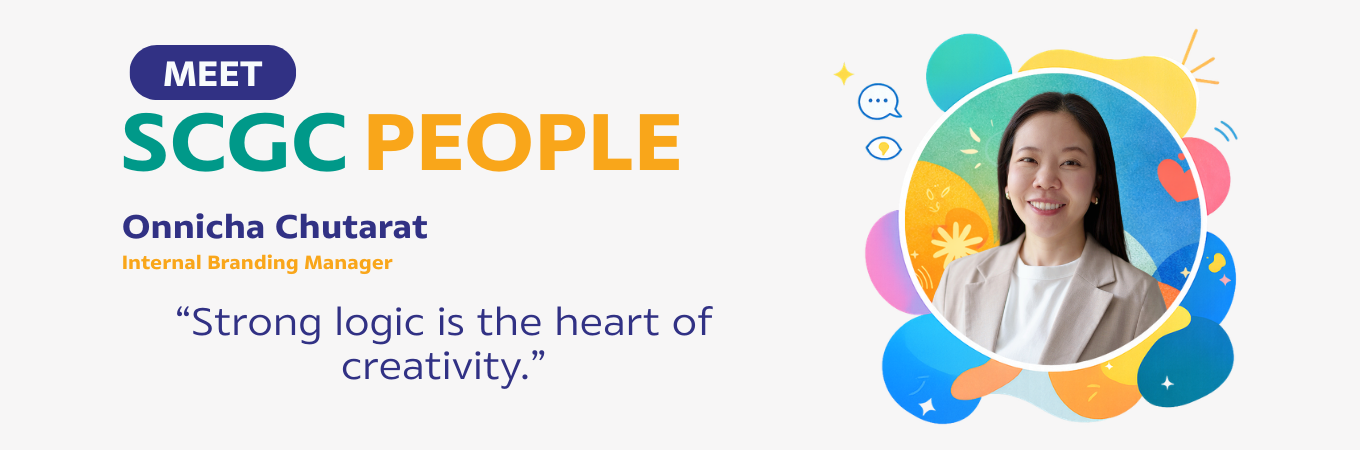
For Onnicha “Kam” Chutarat, Internal Branding Manager at SCGC, the role is about building a bridge between business goals and the hearts of employees. It is about creating the starting point where culture can move forward.
A Decade of Learning in Communication
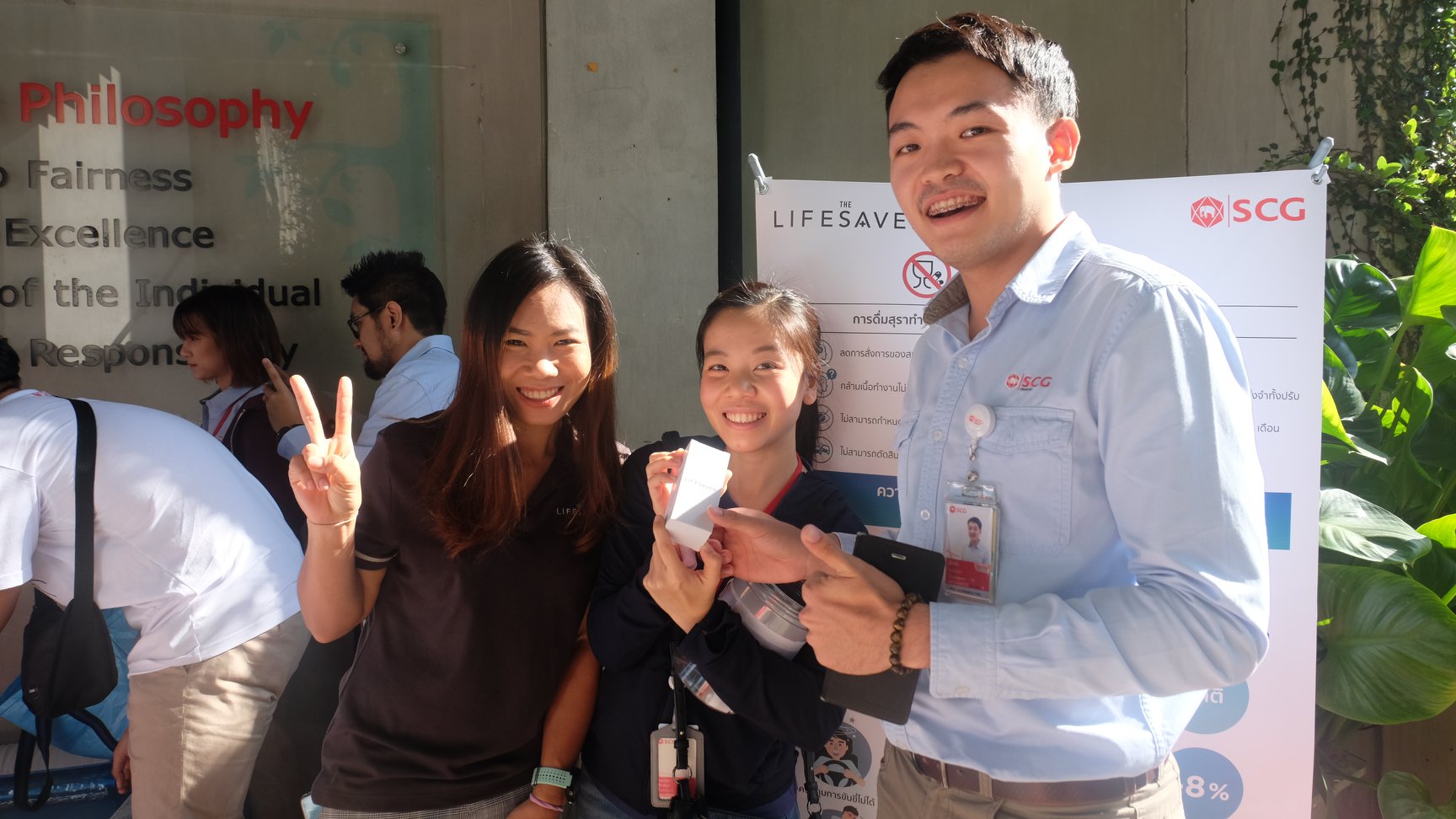
Kam began her journey at SCGC in 2016 and is now entering her tenth year with the organization. She started in internal communication, contributing to culture campaigns such as Crack Your Cocoon, The Lifesaver, I’m Possible, and SCG Circular Way.
Through hands-on execution and learning from her managers’ way of thinking, she built a strong foundation. She later spent three years in External Branding, working closely with external stakeholders, before returning to focus once again on communicating with the people of SCGC.
“External work carries greater pressure in terms of impact and accuracy, but it trains you to be more precise. Internal work gives you more room to experiment. When you truly connect with the story, that energy reaches the audience.”
The Challenge: Turning Expectations into Meaning
One of the biggest challenges in internal branding, Kam explains, is managing subjective expectations across different stakeholders.
There is rarely a clear right or wrong. Priorities and preferences vary. This makes it essential to clarify needs and objectives through careful conversation.
One approach that helps is presenting multiple options, each supported by clear reasoning. This allows teams to align on what is appropriate, not only what is personally preferred.
At the same time, employee insight remains central. Understanding what employees think, feel, and experience becomes the foundation for shaping messages that truly resonate.
“Logic” Is the Heart of “Creativity”
One of Kam’s most distinctive views is simple. Creativity must be grounded in strong logic.
For her, the most important skill in communication is not finding the most beautiful words. It is the ability to connect.
A playful phrase like “AGILE until we Land” in a TEAM campaign video, or a small Valentine’s activity titled “Possibility is in the air,” may seem simple on the surface.Behind each idea is a deliberate connection between what the organization needs to communicate and the cultural moment at that time. The goal is to deliver a message that is easy to digest and still meaningful.
As a team leader, Kam encourages her team to propose ideas alongside the thinking behind them. Why this concept. Which objective does it support. What insight does it respond to. What trade-offs does it require between being sharp and memorable, being fun, and carrying risk.
This process helps communicators clarify intent, stay focused, and make decisions faster.
“If you can connect things well and think systematically, you will move faster and more precisely.”
AI Is a Speed Booster Built on Your Foundation
In a time when AI tools are widely discussed, Kam sees them as powerful accelerators, but only for those who already have strong foundations.
“AI is a speed booster. But it cannot replace the chemistry of human creativity or real insight. Your foundation comes from what you have read since childhood, the movies you have watched, the music you have listened to, and the life lessons you have learned.”
Those accumulated experiences become the internal database that helps people filter which AI-generated ideas are appropriate and which ones can truly be developed further.
Success That Cannot Be Measured by Numbers
When asked about her proudest moment, Kam does not mention engagement metrics or major events.
Instead, she recalls receiving feedback during a roadshow in Rayong, at a time when the team was working on Crack Your Cocoon alongside The Lifesaver.
“One day, a senior colleague approached us and said, ‘Thank you for communicating this topic. I can feel the working atmosphere changing. People are speaking up more, and everyone is taking safety seriously.’”
For Kam, that moment became a real indicator of meaningful work. No chart or performance metric could match the value of seeing culture shift in tangible ways.
Final Lesson: Reading Builds Your Raw Materials
Kam closes with advice for aspiring communicators.
Today, knowledge is accessible through many channels. But one recommendation remains simple.
“Read. Read a lot.”
Strong communication comes from accumulating raw materials through reading and observation, waiting for the moment they can be connected into meaningful work.
Those references become the foundation for organizing thoughts, shaping messages, and communicating clearly, no matter what role one holds.